A scene from The Canterbury Psalter (12th century)
Blog
Freedom and Form: Galatians in Cambridge, 2026

During July 2026 I’ll be co-teaching an interdisciplinary class for Biola’s Torrey Honors College. Paul Spears and I will take 36 students to Cambridge for a three-week course on Galatians. Like anything we do in Torrey Honors, the basic idea is big, simple, and traditional (read Galatians), but the way it’s carried out is based on extensive pedagogical reflection and refinement, with active collaboration by highly motivated students. Plus there are lots of bells and whistles and wheely-bobs and moving parts that might pinch your fingers if you try to get hold of it the wrong way. Let me explain.
Galatians Galatians Galatians Galatians Galatians
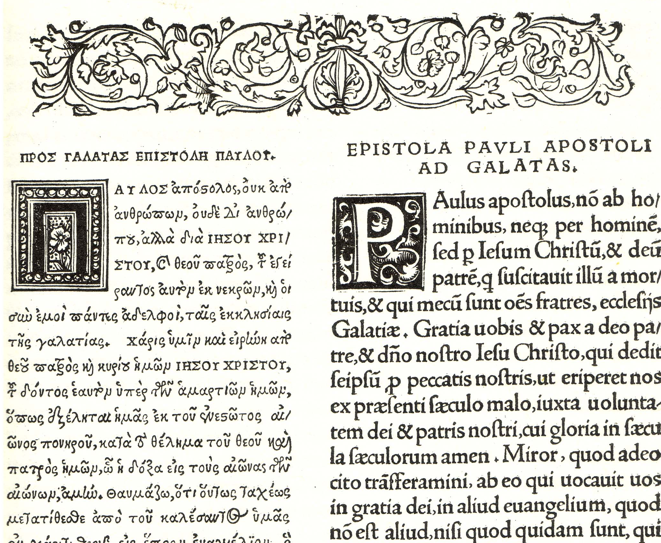
First, Galatians. Students will read the book every day. This alone is a transformative experience if you do it right, and we do all we can to improve the odds of doing it right. Our method is called immersive rereading, which requires reading the book daily. No reading ahead, no playing catch-up, just actually be in the text each day for three weeks. Galatians is only 149 verses long and only takes about 20 minutes to read (or play on audio, which counts). If you want to see a little write-up of how this experience goes, here’s a longer description of our 2024 version of the class, using Colossians (we rotate through Galatians, Ephesians, and Colossians in alternating years). I think Paul Spears and I have been doing summer courses using immersive re-reading since about 2002. On day 1 we have a long, group discussion of the book, and then on day 19 we do that again, but better: students can gauge for themselves how much they’ve grown in Galatiansing.
Sessions on Cambridge Authors
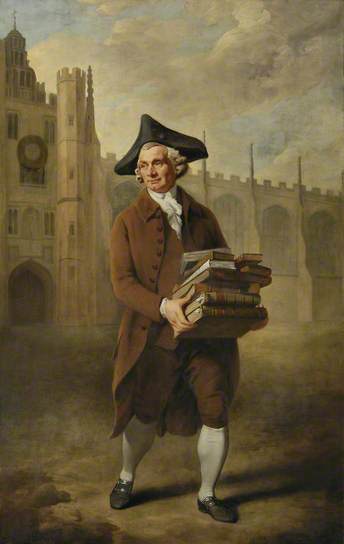
Second, daily sessions (“session” = a three-hour Socratic discussion with 18 students and a professor talking about a set reading) on other books. How do we pick the books? Well, they have to be reasonable candidates for inclusion in a Great Books program, but they also have to be a pretty short and not too awfully difficult, since we’re doing one book per weekday. So “Great Books Lite, Summer Version,” or “Really Good Books Verging on Great.”
And here’s the trick: each book has to be by a Cambridge author. That’s not as restrictive as it might sound at first. Once you start pondering Cambridge’s influence on western letters, you realize there’s usually more than enough to work with. (Example: When I want to assign a poet, I can choose from Milton, Herbert, Wordsworth, Coleridge, Byron, Donne, Dryden, Christopher Smart, Tennyson, Rupert Brooke, Sylvia Plath… it goes on and on).
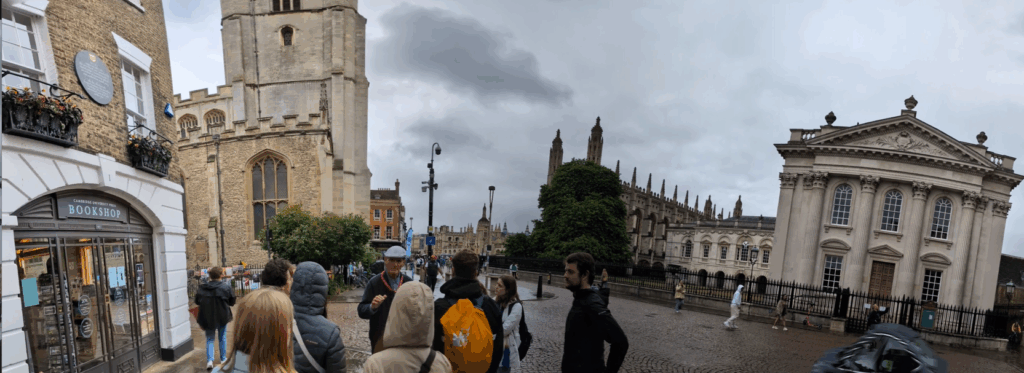
Limiting ourselves to Cambridge authors helps channel our energies into a particular stream, and it also gives us multiple points of contact with Cambridge, significantly deepening the tourist-visitor experience of living in this historic town for three weeks. You might say it’s a form within which we have a lot of freedom.
The Theme of Freedom and Form
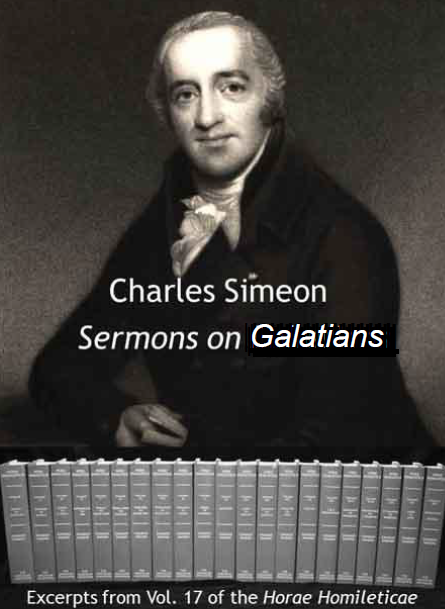
But how is this set of local-author books connected to Galatians? Sometimes they’re directly about Galatians. For example, we are reading sermons on Galatians by Charles Simeon: about half of his Galatians “skeletons” from volume 17 of the Horae Homileticae (circa 1820), which we will discuss in his church, Holy Trinity (see here for tips on how to read Simeon sermon with profit). And we read about 50 pages from William Perkins’ great commentary on Galatians ca 1600. Obviously sermons and commentaries are directly keyed to our central text.
But mostly, because we’re being interdisciplinary rather than doing straight biblical studies, we read books that engage Galatians obliquely by way of exploring a particular theme from Galatians. This gives us the latitude to read poetry, fiction, and various genres in a way that keeps us orbiting Galatians.
The theme this summer is the connection between freedom and form. Paul’s teaching in Galatians on faith and justification equips us with a dynamic view of freedom that is not sheerly wide-open, boundless self-determination but is rather a formed and patterned participation in Christ (which he, with no sense of self-contradiction, can call “the law of Christ” in a surprise formulation near the end, Gal 6:2). We trace this through our various local authors, but we don’t let it determine our interpretations of their work any more than we let their books determine our reading of Galatians. For that matter, we don’t let my declaration of the theme “freedom and form” lord it over either the Bible or the books! In Great Books pedagogy, there is always more than enough to work with and never any need to get stingy or cringey about getting a message across.
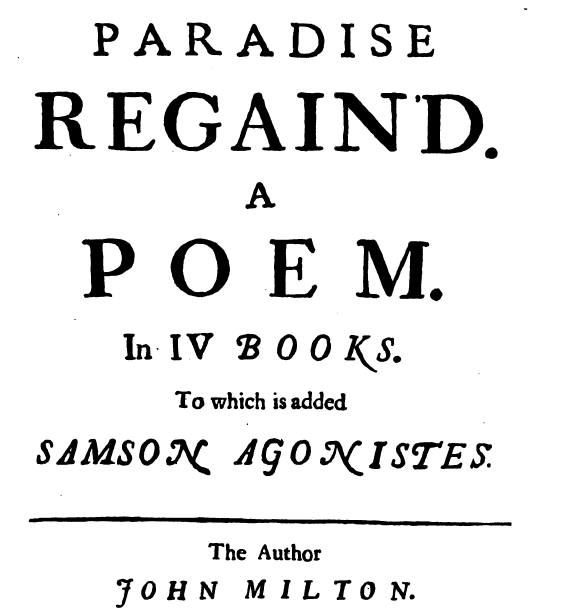
But the theme is a rich one, and it’s really there in the selected works. Every summer we read some Milton, cycling through Comus, Samson Agonistes, and this year Paradise Regained. Almost all the students on the trip will already have read and discussed Paradise Lost back at Biola–this kind of background training is part of what makes a Great-Books-Lite summer trip worth doing. There’s no need to make Milton preach my sermon or get the right answer–and there’s no chance he’d obey my orders anyway–though as soon as you start considering freedom and form in Paradise Regained you’ll start to see it everywhere, from his hermeneutics and theology to his anthropology and poetics. (By the way, PR is about 50 pages long, and it’s not easy to find a decent, booklet-sized printing of it by itself, with line numbers, stanza indentations, and other civilized helps. We had to print our own from old public-domain scans).
The freedom and form theme was already at work in the selection of Simeon, whose sermons on Galatians have a strong tendency to be launching points for the more capacious theology of Romans, delivered with a strong dose of Simeon’s characteristic Anglican prayerbook orderliness and love of established forms. In previous years we’ve read F.F. Bruce as a kind of counterweight to Simeon: Bruce’s book on the “apostle of the free spirit” (UK title) tended gently toward the less nomophilic wild side of evangelicalism. From Perkins’s great commentary we only get to read his exegesis of 2:20-21 and 4:4-7, thus foregrounding his theology of union with Christ (“I am crucified with Christ”) and the big picture of God’s trinitarian plan of salvation (“in the fullness of time, God sent forth his Son…to redeem…and the Spirit of his Son, crying Abba”). But that’s the doctrinal framework within which Galatians’ message of freedom takes place.
Other highlights in the curriculum include HCG Moule’s Life of Simeon (a quick read that only gets a partial session but always pays off), Thomas Clarkson’s Essay on Slavery (a classics-plus-Scripture abolitionist argument with a lot of natural law), and Erasmus’ 1518 Method of True Theology — a book that is somehow both massively influential on the basic assumptions of modern academic life and yet read by nearly nobody. But it’s lively, learned, and engaging to read, he blustered vaguely in a blog post just a few weeks before actual student experience smacked him upside the head with what the young people these days really think about yer obscure 1518 document.
C.S. Lewis was an Oxford man by any standard, but it was Cambridge University that finally moved him out of the precariate and into a proper professorship at “half the work and three times the pay” plus fellow-like honors and rooms at the lovely Magdalene College. Lewis had nine years at Cambridge (1954-1963), and it was a wonderfully fruitful season for him. His books work so well for us on this summer trip that we have gradually ceded to him the vast curricular territory of one book per week! But we do restrict ourselves to books that he published during his Cambridge period. This year, for our theme of freedom and form, that’s his chapters on The Four Loves (originally radio addresses for Americans) in week one and the novel Till We Have Faces in week two. If you know these works, you know they are kind of the theory and the application, respectively, of Lewis’ theology of ordered loves (and ultimately of nature and grace). I won’t belabor how the sub-theme of ordered loves serves to develop the relation of freedom and form, but there it is. Both books read easy and hit hard.
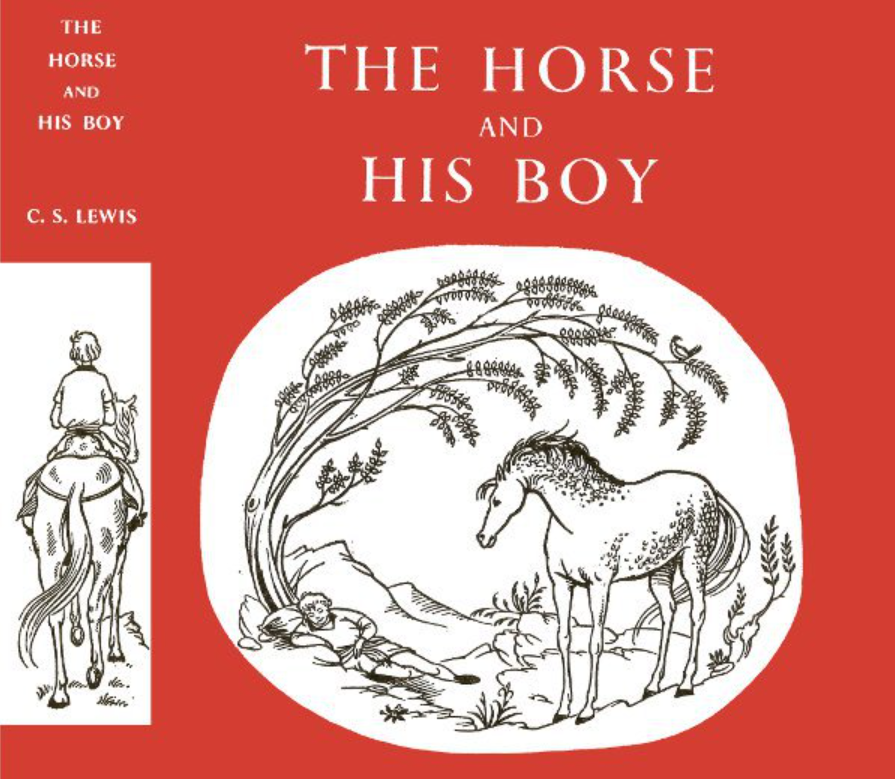
Finally, we’ve developed a tradition of ending the trip with a Narnia book (in the penultimate position: Galatians is our actual final text). Honesty compels me to admit that Narnia is in fact …an Oxford artefact. But! While Lewis wrote Narnia during his years at “the other place,” about half of the books didn’t appear in print until Lewis had taken up the Cambridge chair. So on that slender pretext, we cheat them in because we really really want to. And the thematic fit between Galatians and The Horse and His Boy is so good that it’s almost too on the muzzle. The book really is a meditation on the place of the law in the life of the forgiven. Do free horses roll in the grass? Can they run as fast as enslaved horses? On these hard theological questions, Breehy-Hinny-Brinny-Broo-Hee-Ha has much to say.
But Wait There’s More
This is the academic backbone of the course, but it’s hard to make a meaningful list of how much else happens during three weeks of Biola students and faculty families living in community in the remarkable place that is Cambridge. We’ve got hikes to apple orchards and banquets in hall and shared breakfasts at Downing College and high tea and guided tours of libraries and colleges; we’ve got friends at the Round Church and Tyndale House and local churches; we’ve got guest lectures by experts on Puritanism, Milton, the Bible, and abolition; we’ve got jaunts into London for walking tours, the British Library, the British Museum, Churchill’s War Rooms, the National Gallery and the Tate Modern; we’ve got a Shakespeare play and some musical theatre; we’ve got a long weekend of free time for independent travel to Ireland or Wales or France or wherever; we’ve got the energy of undergrads soaking up the long days of midsummer with their minds aglow.
We’ve been doing this since 2010 (minus two for covid) and we are looking forward to doing it again this summer. We are praying that the word of God in the book of Galatians, read every day, in community, in a stimulating environment, will impress itself on our minds and impart its meaningful form to our evangelical freedom.
About This Blog
Fred Sanders is a theologian who tried to specialize in the doctrine of the Trinity, but found that everything in Christian life and thought is connected to the triune God.