A scene from The Canterbury Psalter (12th century)
Blog
Theology Weakly, No. 4

Scales are excellent visual aids, especially the kind of two-pan, equal-arm balances that let you see two quantities played off against each other. They help you visualize things that can start to seem abstract: equality, comparison, proportionality, ratios, trade-offs, and so on. Earlier this year I browsed through antique stores in California and Missouri, looking for a cheap price on some sturdy, portable scales to show students. I learned a couple of things.
First, there’s technically a difference between scales (which measure weight) and balances (which measure mass). This difference is enforced by science teachers and by Big Scale (I think it’s a plot to sell more scales), but all the rest of us tend to use the word scale, loosely, for everything. Second, I discovered that actual two-pan balance scales are kind of rare. There are gobs of non-functional, decorative ones to sit symbolically on lawyers’ desktops. And there are lots of single-pan scales that use springs, load cells, or strain gauges to display weights, mostly digitally. But they conceal the mechanism of weighing, and I want to show it.
As I shopped around for scales, I ended up with a little one and a big one, and pretty soon it occurred to me that the little one fits nicely on one pan of the big one. I think this is funny. It’s funny because the poor saps over on the little scale can scheme all they want about equalizing their quantities, but really they’re all on the same team. And you can weigh them, together, against whatever goes on the other pan of the transcendent scale. Here’s the visual joke, which I never get tired of:

This week it particularly reminded me of Psalm 62:9, which says “Those of low estate are but a breath; those of high estate are a delusion; in the balances they go up; they are together lighter than a breath.” You can compare low and high estates all you want, but from a bigger perspective, together they are lighter than vapor. I’ve used this illustration for lots of things, but this week I got to use it in a sermon on Psalm 62, “For God alone my soul waits in silence.” The point of the sermon was that God is the refuge of believers when they are overwhelmed, and that Psalm 62 is itself one of God’s tools for making that known. Along the way I got to say that God outweighs the overwhelm, and that when we get overly absorbed with the ups and downs of our lives, we should remember that God works on a different scale. Pun intended, point illustrated.
That Nov 1 sermon marks the end of a season I’ve spent in Psalm 62. I took notes on the Psalm for several months, reading widely in church history and commentaries. I took around 7k words of notes (shared here). I even made a Spotify playlist of 16 different songs based on Psalm 62. Video of the sermon posted here on this blog, along with jpgs of some of the slides and visuals that I think might be most helpful.
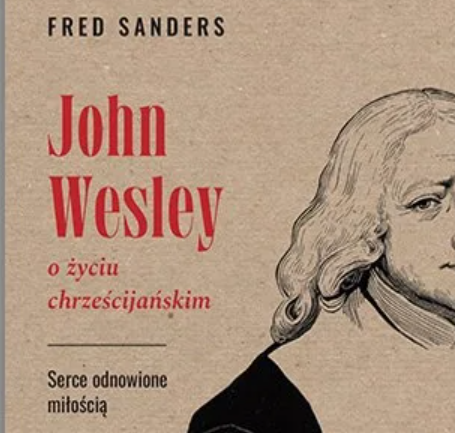
Polish translation of my book Wesley on the Christian Life: The Heart Renewed in Love! I always think translation is magic, and it blows my mind that a publisher in Poland believes my book will find readers in that nation that I was not thinking about as I wrote it. This edition looks great, and has an introduction for the Polish audience by pastor Adrian Myśliński. One thing about it surprised me: It’s actually an abridgement. I wrote ten chapters, but this edition consists of four. It’s a pretty solid decision, since they’re the first four and they do stand on their own pretty well. I introduce Wesley as a spiritual guide, describe his Aldersgate experience and what it means for Wesleyan theology of faith and regeneration, explain the Methodist/pietist “heart religion,” and then describe Wesley as “The Theologian of First John” (that’s the title of chapter four). I also like the next six chapters, but I can see that, compared to chapters 1-4 the later chapters tend to focus on more isolated topics: justification by faith, the role of the law, the means of grace, Christian perfection, Wesley’s ecumenical impulse, and his experiential trinitarian theology.
Is Ephesians one long Christological interpretation of Psalm 68? Maybe. In Eph 4, Paul makes creative use of a few lines from Psalm 68: “You ascended on high and took captivity captive; you gave gifts to men.” Commentators note that Psalm 68 was speaking directly to that ascended one (God), but Paul paraphrases it into speech about that person: “He ascended on high,” etc. Furthermore, Ps 68 says this conquering warrior received gifts; Eph 4 says he gives gifts. The best explanation of that alteration of wording is that Paul is reading metaleptically, that is, he has in his mind the entire Psalm. Taken in at a single glance, the long and complex Psalm tells of a victorious warrior God who frees captives, sets orphans in families, and causes the desert to flourish. The one who is said to receive gifts in one verse actually also gives gifts throughout the Psalm; he rises up to be the sovereign who distributes and disposes plunder.
Speaking of rising up, the famous opening line of Ps 68 is “Let God arise and his enemies be scattered.” It was a line shouted when the Levites lifted up the ark for battle, and in terms of “the Old Testament Use of the Old Testament,” Psalm 68 can be thought of as an elaboration of that battle cry. But it can also be shouted by New Covenant believers who know the secret of how God did really and truly arise–Ἀναστήτω ὁ θεός, as the LXX says here–and scattered his enemies. That same risen God has armor of his own with which he clothes and empowers his own body, the church. Once you’ve got a reason to start looking around Psalm 68 from the vantage of Ephesians, you see a lot of connections. Ephesians is, of course, uniquely focused on the ascended Christ, so the ascension Psalm for the triumph of the divine warrior resonates. And the final three words of Psalm 68 LXX are the first three words after the salutation of Ephesians: εὐλογητὸς ὁ θεός.
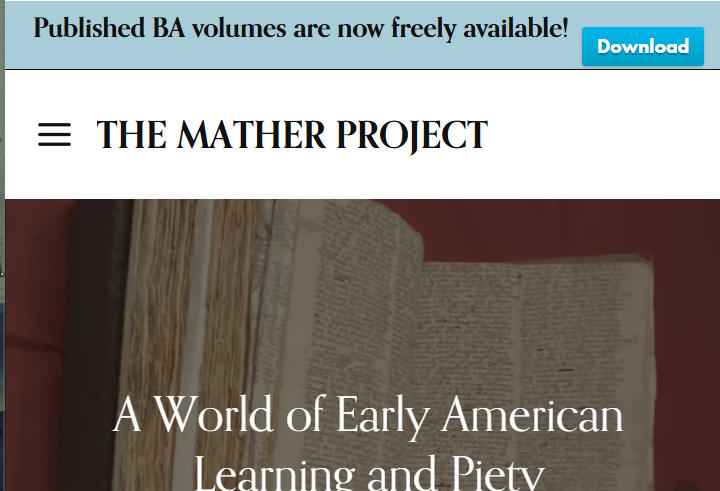
Cotton Mather (1663-1728) wrote a massive Bible commentary, “the first comprehensive English-speaking Bible commentary from colonial British North America.” We call it the Biblia Americana, and now it’s not only in print, which would be amazing enough, but it’s been carefully edited and lavishly annotated. It amounts to ten volumes in 10,000 pages. And the parts I’ve dipped into are remarkable. Mather was deeply learned, made the most of his admirable library, and had a perfectly preacherly mind. He dug into details, resolved scholarly confusions, compared commentaries, chased curiosities, made devotional applications, and thought with a relentlessly typological and symbolical frame of mind. Literally at random, here’s a snippet of what you find the Biblia Americana at Heb 1:3:
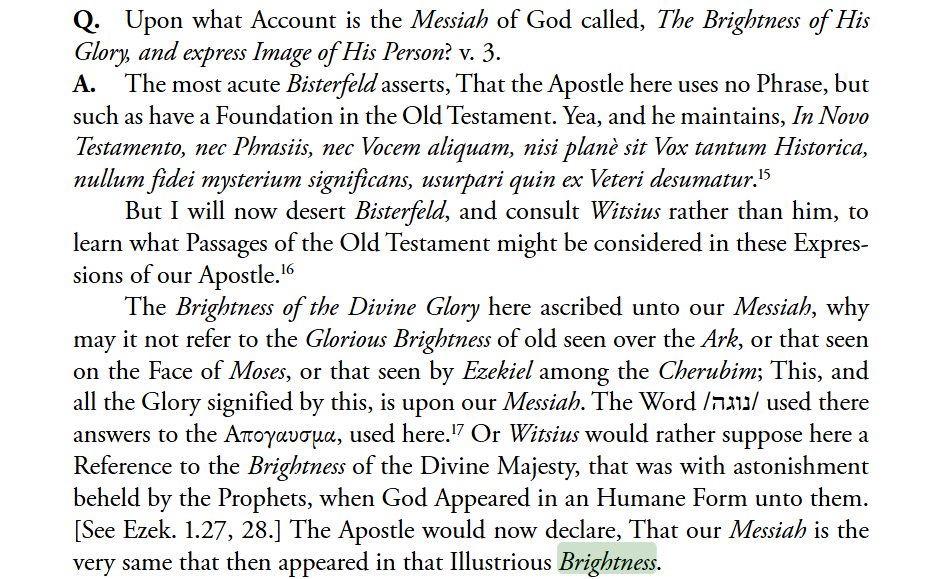
A lot of people have opinions about Cotton Mather, and his published works have drawn some deserved critique. But the Biblia Americana, complete with massive scholarly apparatus, really gives you a chance to read him on his own terms.
Oh, did I mention the entire Biblia is open access and can be downloaded in pdfs? Seriously. Amazing work, amazing access; cheers to Mohr-Siebeck and everyone involved.
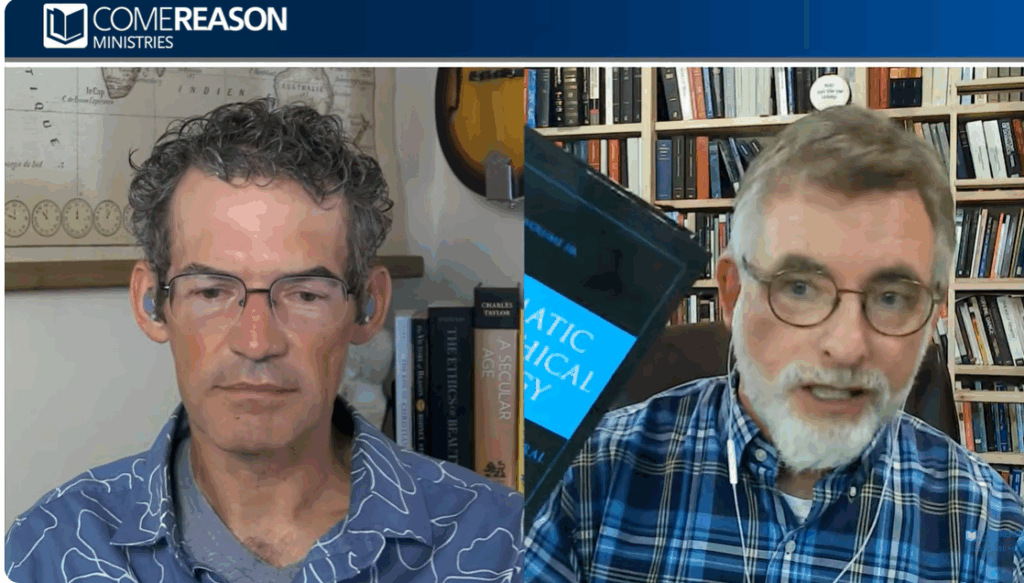
You might enjoy the podcast I did last week with SoCal apologist Lenny Esposito. Late in the conversation about Nicene theology, Lenny asks about our mutual friend William Lane Craig’s published position on the eternal generation of the Son. Craig’s against it. Nevertheless he’s a certain kind of “there are three persons in the one God” trinitarian. It’s just that those persons aren’t Father, Son, and Spirit, or at least that second person isn’t Son except in the salvation-historical sense of having become incarnate. That is most definitely not Nicene, and in Craig’s Systematic Philosophical Theology volume 2B he lays out his case. I take a few minutes to describe how it differs from the traditional view, and why that difference is a problem: because the Nicene view is not just traditional but also correct and biblical.
Next week I hope to have some news and updates about projects and publications.
About This Blog

Fred Sanders is a theologian who tried to specialize in the doctrine of the Trinity, but found that everything in Christian life and thought is connected to the triune God.